A blog originally for keeping track of my hobby of being a Beekeeper which has evolved to include Home Brewing and even more recently to follow me and my families approach to "The Good Life". Eventually I hope to include baking recipes and stories of our flock of chickens also reporting on the success and failure at the allotments.

Showing posts with label honey extraction. Show all posts

Wednesday, 28 May 2014

Spring Honey Extracted

Continued on from my last post, which had no photos, here is the process with photos!

Spring honey extraction
Steph tending the smoker


Spring honey extraction
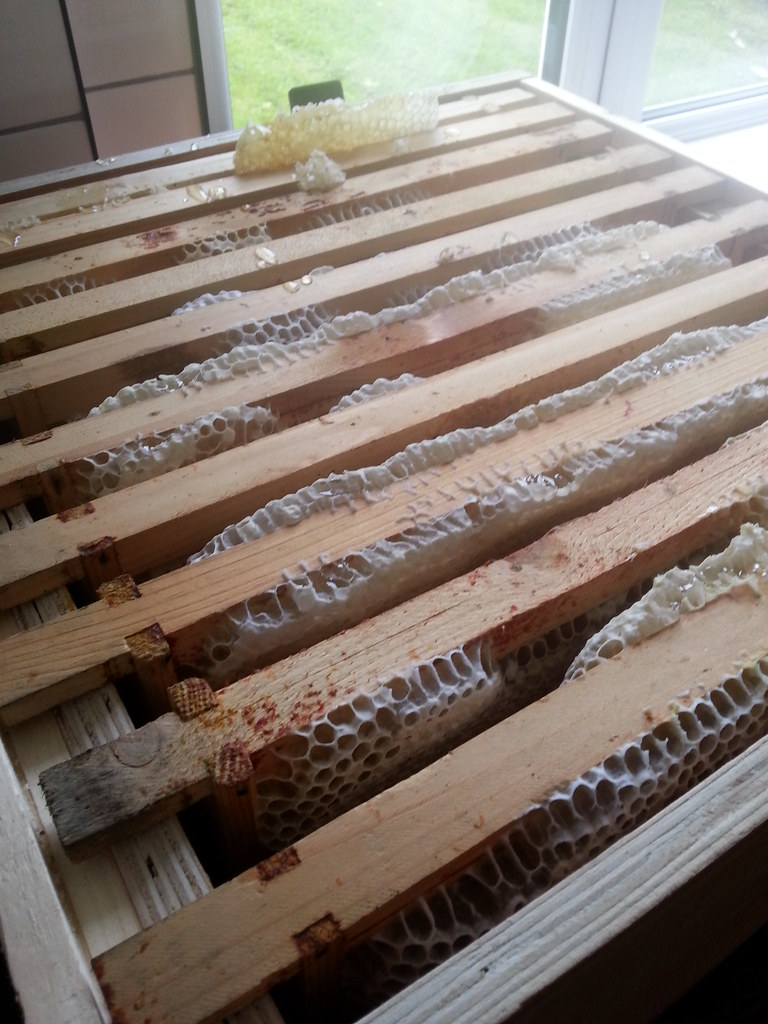
Lots of full frames of honey


Spring honey extraction
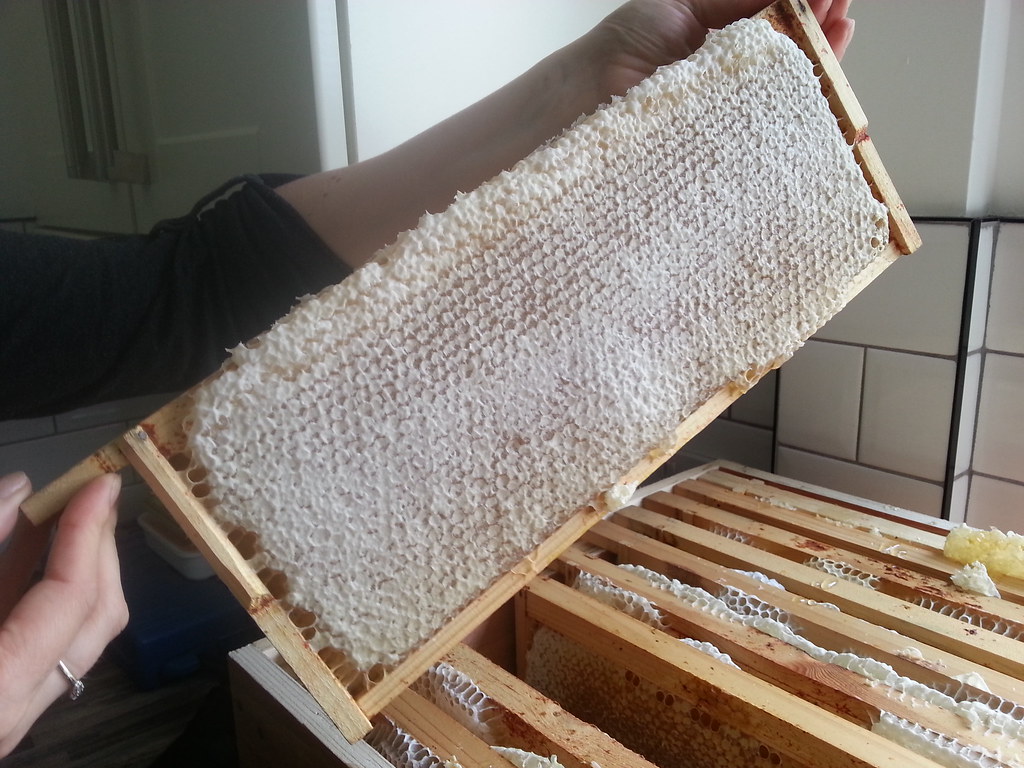
All capped and ready to go


Spring honey extraction
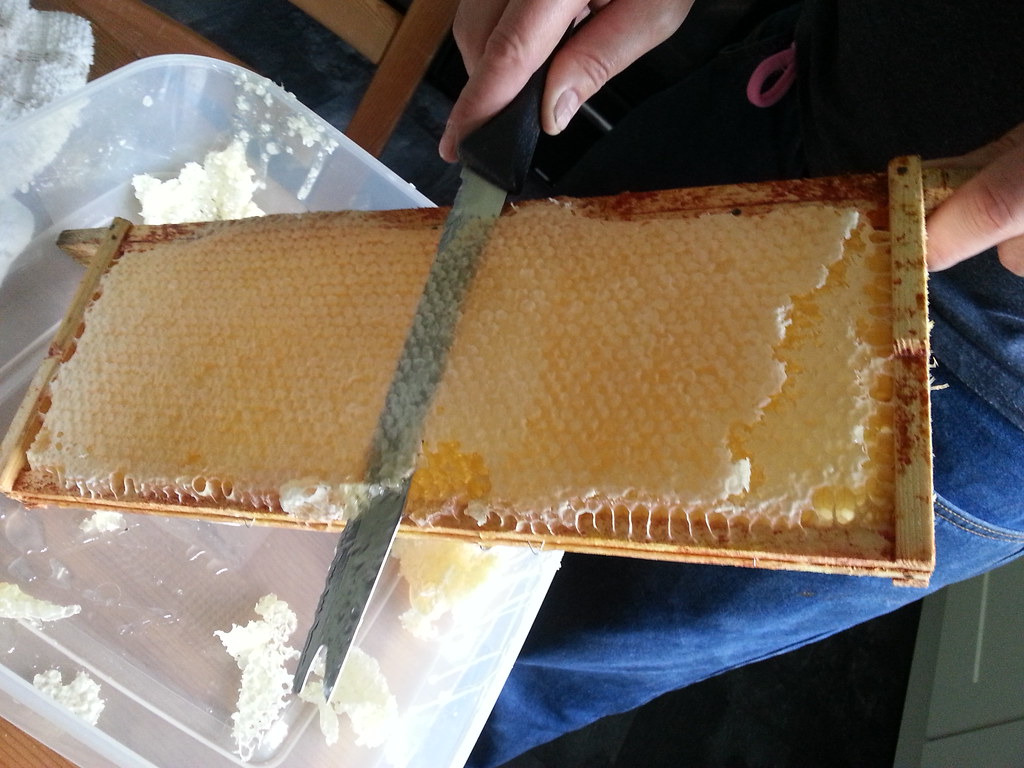
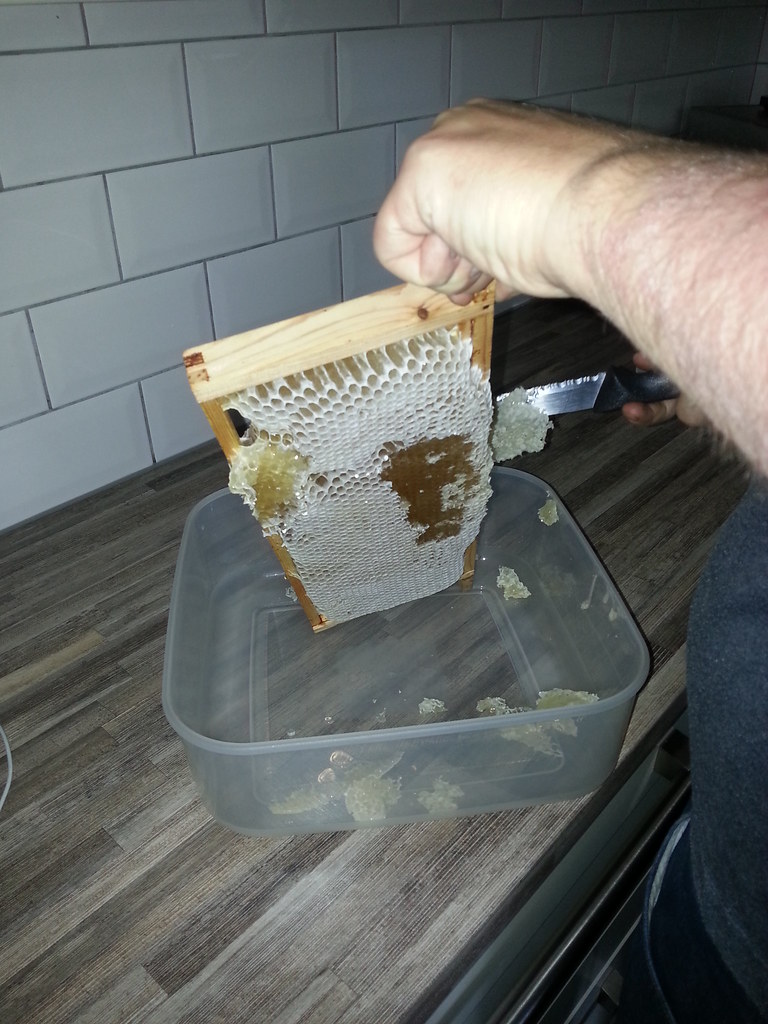
Using a sharp knife I sliced the cappings off


Spring honey extraction


Spring honey extraction
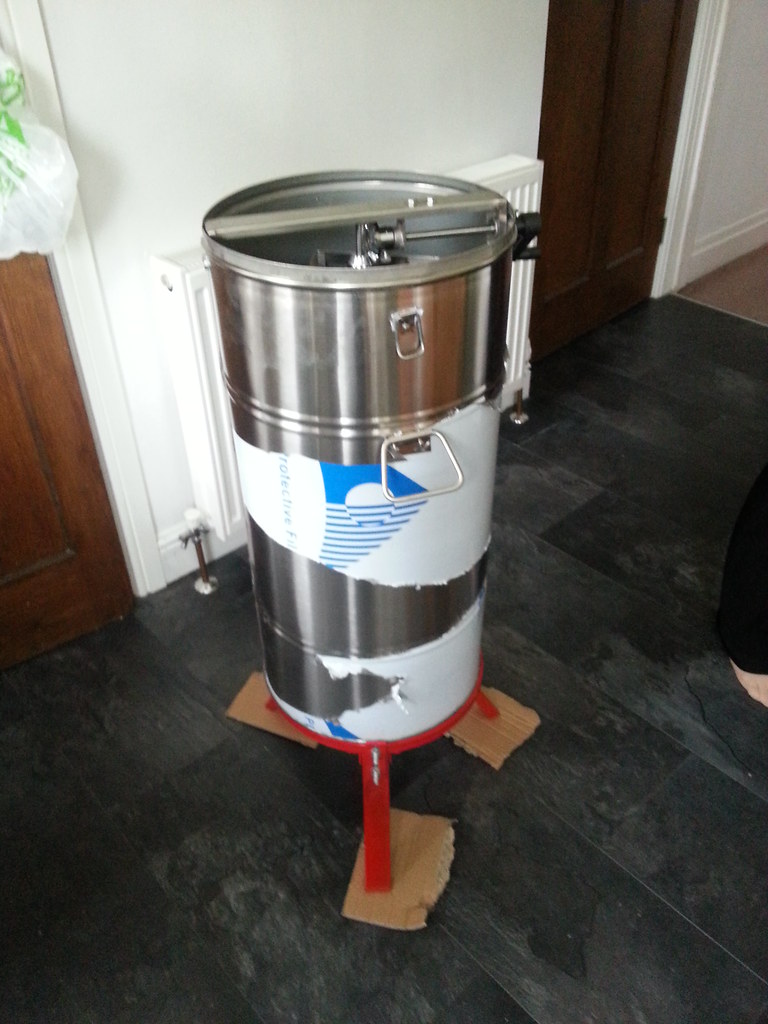
My brand new extractor - the plastic protective layer has since been removed


Spring honey extraction
More cappings sliced off


Spring honey extraction
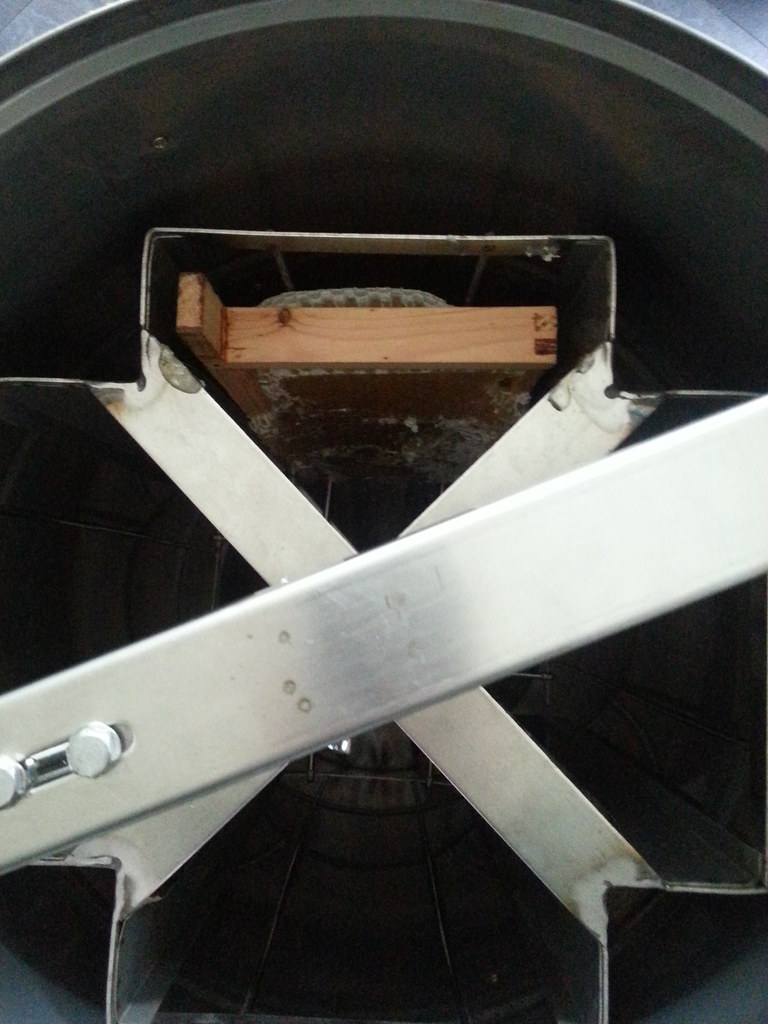
The extractor takes 4 frames at a time


Spring honey extraction
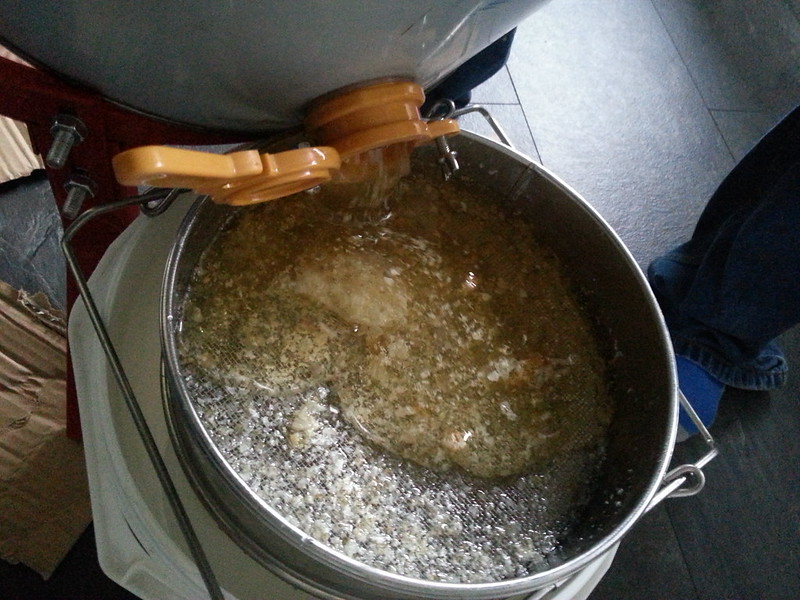
Honey and bits of wax going into a 2 stage strainer


Spring Honey
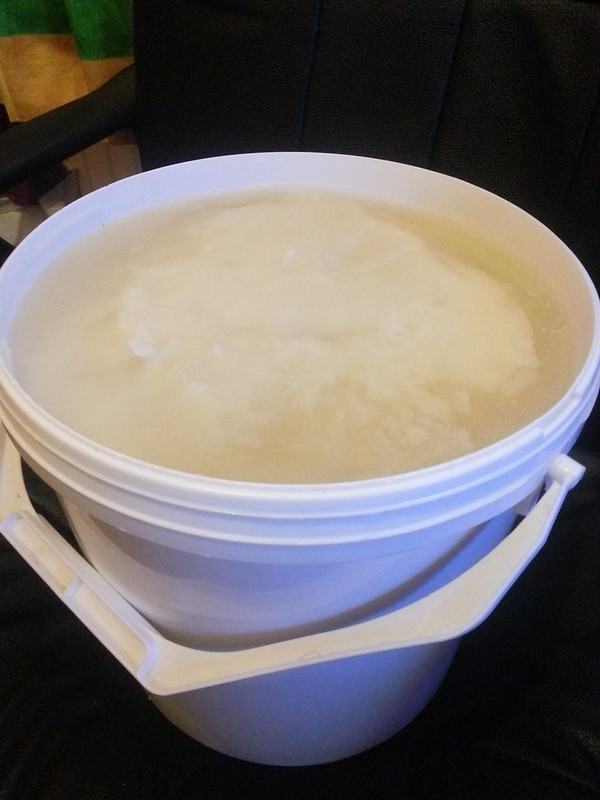
A part bucket of honey 2 days after extraction, it has set solid!


Spring Honey
The full bucket of honey - again set solid. There's approximately 15 kg in there!

Spring Honey
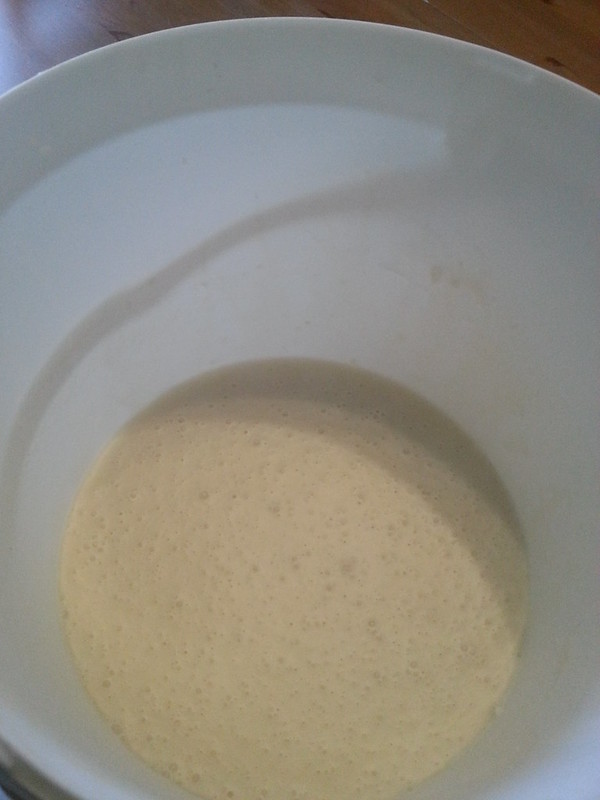
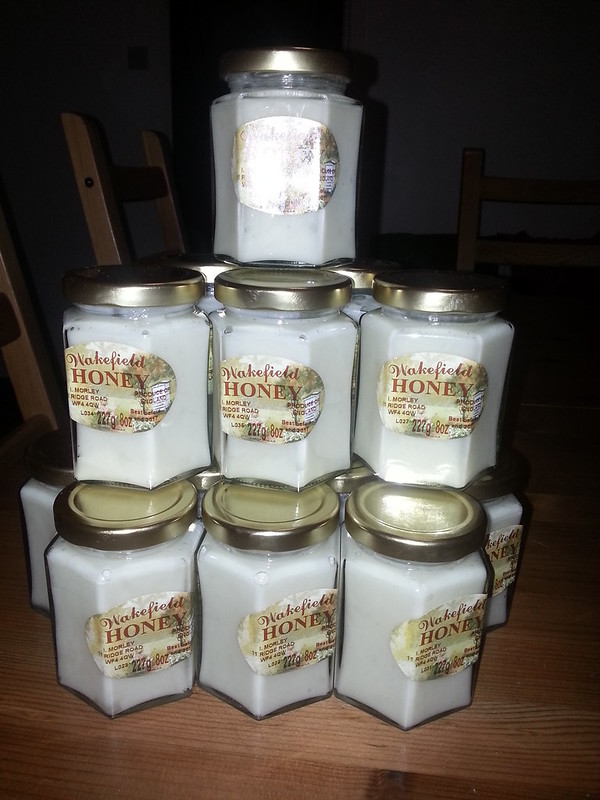
After vigorously beating and stirring the set part bucket of honey I was able to get it soft enough to put some in jars.

Tuesday, 27 May 2014

Spring Honey

I have recently come back from a family holiday in Malta (which will be the subject of another post) and all the time I have been away I have had in the back of my mind the honey in the combs. At this time of year there is oil seed rape (OSR) in the surrounding fields to my apiary and OSR honey is well known for it's properties of setting solid in the cells. Before I went on holiday I did conduct an inspection and at that point there were several frames of honey ready for extraction however I didn't have enough time to get hold of an extractor before my holiday.

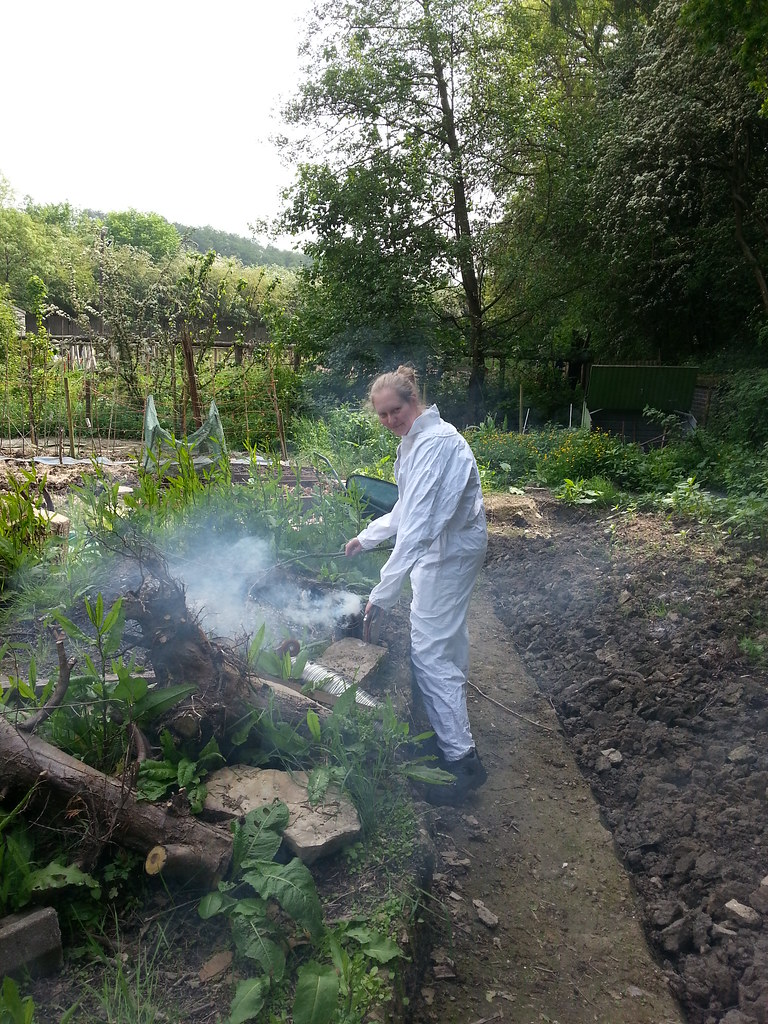
The first chance I got to go to see the Bees I was especially lucky to have my wife with me to help as once I'd opened the first hive it was clear that we were going to be taking lots of honey from the hives. The first colony I checked had the most and I still didn't take it all. I think I took approximately 12 frames from the first hive. When I moved onto the second hive it was clear there wasn't as much honey to take but there was still about another 8 frames! Between me and Steph we got the job done quite fast; Steph operating the smoker and passing me equipment while I shook the Bees off the frames and took them to the side to be taken away later. I also did a quick inspection while in the hives and couldn't find any queen cells, although there was a huge amount of Bees therefore they could be near to swarming.

After we had finished in the hives we headed off home with 2 supers mostly full of honey. I was unable to lift them together and lifting them 1 at a time was a struggle. The next problem was extracting it. The same day I had a WPBKA committee meeting and there I discussed with another member the use of her extractor however while in the meeting I got a notification on my phone telling me I'd been the highest bidder in an auction for an extractor! The extractor arrived 2 days later and I cracked on with extracting the honey. I will put the extraction process in another post.

Wednesday, 31 July 2013

Honey Extraction

In the last post I did me and Steph collected several frames of honey for extraction. I was at work the next day and on my break I called the guy who rents out the extractor for our local association. Unfortunately I was not successful in getting through to him so had a bit of a panic; lots of honey in the comb and no way of extracting it! I had a brainwave to call my friend who supplied me with my current Bees and see if he had an extractor I could borrow. I was in luck, not only did he have one, the one he had was excellent! When I have bottled up all my current wines I have on the go at the moment I will have to give him a couple of bottles to say thanks.

The first step was to take the cappings off the honey comb. This was simply done with a sharp knife and a steady hand. Once that was done the frames were put in the extractor then all that was required was to spin it to get the honey out. This is a manual extractor but required minimal effort to get to speed. The next videos show my daughter managing to turn the handle and extract some honey!


Sunday, 4 September 2011

Apiary inspection 30/08/2011 and Honey Extraction!!!

Last Tuesday I went up to the apiary to remove the honey that my Bees have kindly made for me. I didn't want to take too much from them as they have worked so hard for it so I took 5 completely capped frames and left all the half full ones. The Bees will continue to collect honey up until the flowers have gone but what they collect from now will all be theirs and hopefully this will reduce the amount of sugar syrup I'll need to feed them over the winter.

This time I was on my own and didn't take any pictures and will be taking less pictures in the future as I don't want too much repetition. When I arrived the first thing I did was light the smoker and then suit up. When I was suited up I went to the hive and removed one of the supers and swapped around the frames so I had 5 full frames of honey and 5 frames the Bees haven't got round to drawing out yet. The weight of the frames were impressive and later on worked out to be over a kilogram each. When I'd got the frames of honey I closed the hive up and collected the debris underneath to do a Varroa count later. I didn't inspect the brood chamber this time as the hive had been open a while by then.

When I got home I sent an email to the secretary of Wakefield Beekeepers asking for the contact to hire an extractor for the day. I was sent details of a man called Keith that lives a couple of junctions up the motorway so was in short driving distance. I called him on Thursday and arranged to pick the extractor up after work. The extractor is a 9 frame electric one and it cost £2 to rent for the day, bargain.

The frames in the super

A almost fully capped super frame

Using a sharp knife the cappings are removed

A sticky job but fun


The frames are placed in the extractor which spins at high speed forcing the honey out of the frames

The liquid gold running into a storage bucket via a pair of tights! This filters out bits of wax in the honey. I will need a better filter if I intend to sell the honey

The first jar of my honey
I took the above bottle to work to let people taste it and I think it went down well.


You may have noticed that there has been no mention of the varroa count up until this point. I haven't forgot, I just didn't have time to do it until today. There were 71 mites that I counted which was over 15 days. Below is the report from Beebase. I will be treating them ready for winter on my next inspection even though the count is still low as it's increasing at a alarming rate.

Average Daily Mite Fall = 4.7 varroa mites
Estimated number of adult varroa mites in the colony = 190
Treatment is recommended in about 9 month(s) time (counting from day of first monitoring).
Friday, 26 August 2011

Apiary inspection 15/08/2011

I've finally managed to get caught up with my blog posting with this post. 10 days ago me and Steph did an inspection, however this time she was really brave and did most of it. In fact the only things I did were light the smoker, open the hive, remove the first frame and any heavy lifting. She enjoyed it so much that she has agreed that a hive in our back garden is a strong possibility but is likely to be a top bar hive; a top bar hive would mean less heavy lifting and looks a lot nicer than just a wooden box not to mention a top bar hive will be cheaper!

Steph all suited up

The smoker ready to go

If you look almost in the centre there is a Bee emerging from it's cell!


Steph looking very professionally 

Queen Bee-atrix and plenty of brood

This is the frame nearest the entrance, I think they put the holes there for extra ventilation


Beekeepers together!

I also took the debris from the varroa board and later that day counted the mites. I found 37 mites and that was over 14 days. Using the calculator on the Beebase website I got the following result:

Average Daily Mite Fall = 2.6 varroa mites
Estimated number of adult varroa mites in the colony = 110
Treatment is recommended in about 9 month(s) time (counting from day of first monitoring).
Although the results are again fairly low I intend to treat the hive as soon as I've removed the honey, which hopefully will be next Monday or Tuesday. I will then contact my local Beekeeping club who offer a extractor for hire. With any luck I should have some honey in the next few weeks.


Sunday, 3 July 2011

Beekeeping Course: Week 8

This week was the last session of the Beekeeping course I've been doing and I must admit I will miss it. Again the weather turned out nice so we started by going straight to the apiary after we had all suited up. This week, rather than the tutor leading the inspection, we were leading it.
The person who went first started by giving a puff of smoke across the entrance of the hive and then after letting the smoke circulate opened the hive. Once inside we checked the brood comb for signs that there was a laying Queen; within a couple of frames we had seen eggs and brood but no Queen. Though the Queen wasn't sighted it was no reason for alarm as the presence of eggs showed that she was there somewhere. After everyone had removed a few frames and inspected them we returned to the classroom for the last stage of the course.

After a break we started on extracting honey from the frames.The first step is to remove the wax cappings which is done with a uncapping fork, a heated knife or just a sharp knife! You can spend a lot of money on extraction so we were shown a way of reducing the cost slightly by making your own extracting tray; all that was needed was a bucket with a length of wood across the diameter of the bucket with a hole large enough for the edge of a frame to sit in securely. With the frame securely in the holder we were then shown how to remove the wax cappings; using a sharp knife and a gentle sawing motion downwards just under the surface of the wax. When all the cappings were removed from one side we were asked if anyone else wanted a go. Two people had a go before me. I managed to get the cappings off without too much hassle. Next we loaded the extractor; basically a stainless steel drum with a motor that spins the frames round causing the honey to be removed using centrifugal force. When the extractor had run for about five minutes it was lifted onto the table. Once on the table a valve was opened and the honey was able to flow into the jar that was placed under the valve. The honey was then given a chance to settle before we were given the opportunity to taste it! The taste of fresh honey differs considerably to shop bought honey, this one had a floral taste but with citrus in there as well. At least that's what I thought!

The very last bit of the classroom session was taking about what further courses are available and the path to being a master beekeeper. I have already talked about these in an earlier post so won't repeat myself. Unfortunately I was working that night so couldn't stay around and chat after but if by chance anyone from the course is reading this then please comment and I'll do my best to stay in touch.